
About Us
Our StoryHebHomes is a dynamic and fast-growing company that has taken its passion for our architectural heritage and great design to create unique modern living spaces at affordable prices for customers throughout the UK and abroad. With hundreds of houses already built and many more in the pipeline we are a company with an established track record you can trust. We have our origins in the architecture practice Dualchas, founded by twin brothers Neil and Alasdair Stephen. The simple idea was to make the best architect-designed Dualchas house designs available as off‑the‑peg kits to as many people as possible. Over the last two decades we have developed these designs with the latest eco‑friendly construction materials to enhance and expand our HebHome offering. We have also built a network of trusted partners and suppliers as our team has grown across offices in Glasgow and the Isle of Skye. Our designs have won many awards and are recognised as having influenced and greatly improved the quality of buildings in rural Scotland and beyond: designs from both Dualchas and HebHomes have been showcased at the V&A design museum in Dundee. Interest in our designs is now global with our first house now under construction in the United States. Customers firstWe realise that you are not just buying a kit house, but building your dream home for the future. To make this process as effortless as possible, we will provide you with all the information, guidance and expertise to select and build a home that meets all your requirements. You will be guided through every stage with your own project manager, with a commitment to professionalism, integrity and design excellence. We always respond to what our customers tell us. It means that we refine and expand our designs to match your needs. While Hebhomes provide over 40 standard designs to choose from, we can amend and tweak your chosen design to meet the demands of your site and brief. You can also decide our level of involvement from the start. HebHomes ‘turnkey’ service can take you through the entire build process from planning to completion. You could also choose our partial turnkey service, where we construct to externally complete, leaving you to finish off the inside. We only use affiliate with contractors with good reputations in the industry so we can continue to deliver fantastic houses and satisfied customers. This is currently limited to Scotland. Sustainable and Environmentally SympatheticOur landscapes are precious. We have a responsibility to enhance our countryside, not despoil it: we want our houses to look like they belong. And we must do this while protecting our environment. We believe that we can achieve this by taking inspiration from the simple, narrow designs and careful proportions of traditional northern European rural architecture. This means the designs have a connection to the past, yet are contemporary. And they are highly energy efficient, use environmentally sustainable materials as well as being beautiful homes. Our hope is that future generations will come to cherish the HebHomes house as part of their own cultural heritage. Good architecture can help make beautiful places even better. Our TeamWe are proud that almost 70% of our staff have architecture qualifications. Led by Alasdair Stephen, a RIAS architect educated at Strathclyde University, HebHomes has an outstanding track record of innovative design and business excellence and has delivered over 300 homes to customers in rural and urban locations throughout the UK and Ireland. As well as our highly-qualified staff we work with engineers, technicians and builders who understand our products and share both our ethos and our deep commitment to our customers. |
|
|
Alasdair Stephen RIAS – Managing DirectorAfter graduating from Strathclyde University with an honours degree in architecture, Alasdair continued his education at Sabhal Mòr Ostaig, the Gaelic college on the Isle of Skye. It was during this course in business studies and communications that he set up Dualchas Architects with his twin brother Neil. Subsequently Alasdair founded HebHomes with his brother Neil and former director Donald John MacLennan. Alasdair has led HebHomes since 2010, growing the company with help from his talented and dedicated team of staff. |
.jpg) |
Neil Stephen RIAS - DirectorNeil Stephen was educated at Glasgow School of Art and the Mackintosh School of Architecture. After graduating, he travelled to Hong Kong where he spent several months working on major commercial projects for Tom Yip Architects. His fifth year dissertation examined the architectural and political problems of housing in the Highlands, and led to his setting up Dualchas Building Design with his brother – later renamed Dualchas Architects – which set out to transform the design quality of domestic Highland architecture. He was lead architect on a house project at Boreraig which won an RIAS award and was widely published internationally. As a founder and director of HebHomes he has helped lead the way in bringing affordable quality design to the wider public. |
 |
Fraser Stewart - Associate DirectorAfter studying Architecture at the Glasgow School of Art, Fraser’s focus became sustainable, high-end residential architecture in rural parts of the UK. He worked with Dualchas Architects on the Isle of Skye before completing his studies at university. Prior to joining HebHomes, Fraser was a director of a Glasgow based architectural start-up which focused on extension and alteration to people’s homes. Fraser now specialises in architectural business management, helping to deliver high quality projects across the UK with his talented project management team. He is responsible for the day to day running of HebHomes, as well as overall company strategy and service quality. He oversees the full client journey and makes sure that projects get to site smoothly. |
 |
Lynsey Foley - Sales ManagerLynsey graduated with a BA in corporate communications from Queen Margaret University in Edinburgh and worked as an agency accounts manager at the Scottish Media Group before serving in senior sales positions at the Herald, the Daily Mail and Radio Clyde. She joined HebHomes in 2011 and is in charge of coordinating sales for a fast-growing company. She also plays a key role in media communications and events organisation |
 |
Jamie Hutton - Technical ManagerJamie is an experienced technician who graduated from Edinburgh Napier University in 2015 with a MSc in Architectural Technology and Building Performance. He has worked for a variety of companies including Keepmoats Homes and Persimmon Homes. Jamie joined Hebhomes in 2022 and brings huge experience in Revit and detailing excellence to the business. He has a keen focus on modern construction, delivering a fabric first approach to sustainable design.
|
 |
Lewis Hutchison - Architect & Senior Project ManagerLewis trained at Strathclyde University School of Architecture in Glasgow where he achieved a Masters in Advanced Architectural Design. He has a keen interest in rural housing and worked for various practices during his studies such as Jewitt & Wilkie Architects and CRGP Ltd. For six years he worked at JM Architects in Edinburgh, during which he was involved in many large-scale projects across various sectors, including education, student accommodation and residential. Lewis joined HebHomes in September 2020 and has been a fully qualified architect for several years and brings this excellent experience to his role as a senior project manager. |
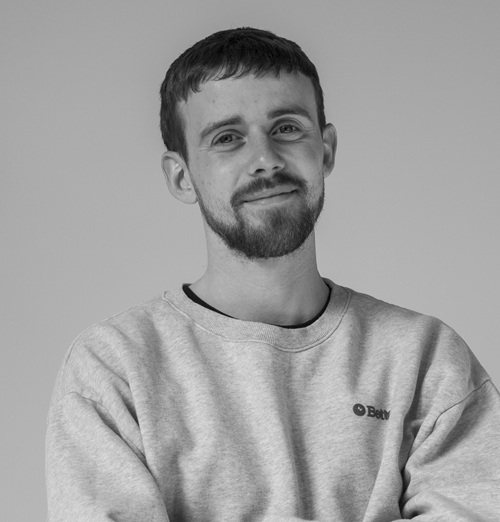 |
Jake Hagan – Architectural TechnologistAfter studying Architectural Technology at the University of Brighton, Jake gained 5 years of experience in the new build residential sector in London, where he worked on several large-scale projects with varying degrees of complexity. In addition to his primary role, Jake contributed to the Computational Design Team, developing knowledge and skills in parametric design, coding, and automation. Driven by a desire to apply his skills and knowledge to more sustainable and considered design practices, he joined HebHomes in October 2023. Since then, he has been assisting the team in developing their standard detail library and in-house delivery workflows. |
.jpg) |
Sharon Clayton – Finance ManagerAfter re-locating from Lancashire to the Isle of Skye, Sharon started working for HebHomes and Dualchas Architects in 2011. Sharon previously worked for a Construction Cost and Project Management Company in Manchester City Centre. Sharon is responsible for the Accounting and Finance, where her accuracy and attention to detail is highly valued. |
 |
Craig Stephen - Non-Executive DirectorCraig has over two decades experience in finance as an investment analyst, corporate advisor and investor. He began his career working for Cresvale Securities in Hong Kong and is currently Investment Director of MediaCap, an Australian media-for-equity fund. Craig is the brother of Neil and Alasdair and brings his wealth of knowledge working with growth companies to advise on international business expansion, funding and strategy. He has an economics degree with honours from the University of Strathclyde and joined the board of HebHomes in 2019. |
|
|
Alexandra Adams – Project Manager & Architectural DesignerFollowing her first class honours, Ali graduated with a Masters of Architecture from the University of Strathclyde in 2020. Her research into zero-carbon construction materials won her the Glasgow Institute of Architects Award and Royal Scottish Academy New Contemporaries award. Ali previously worked with Comprehensive Design Architects in both Edinburgh and Glasgow, gaining experience of commercial developments as well as refurbishments of listed buildings. Continuing her research into sustainable construction practices, Ali joined HebHomes in 2021, quickly establishing herself as a key member of staff. Within the team she is a talented project manager, delivering high quality designs and guiding clients throughout their build. |
|
|
Rebecca Irving – Architect & Project ManagerRebecca obtained her Masters of Architecture in 2021 after graduating with a First Class Honours from from the University of Strathclyde. Her Masters projects focussed on the role of feminism in architecture; a topic which she continues to pursue. She recently obtained her Architectural Accreditation in 2023. An organised and skilled designer, Rebecca is a project manager and architect at HebHomes. She is responsible for guiding clients throughout the duration of their projects and for providing assistance on internal design coordination. |
|
|
|
.jpg) |
Robert Grace - Project Manager & Architectural DesignerSince graduating with a Postgraduate Diploma in Architecture from the Glasgow School of Art in 2018, Robert has maintained a keen focus on residential architecture, working at both Cameron Webster Architects in Glasgow and Studio East Architects in Perth. He previously worked as a Part 1 at Kettle Collective in Edinburgh, focusing on larger, international developments. In these roles he has taken on personal responsibility for multiple projects from initial design to delivery on site, liaising with contractors, consultants and clients in order to achieve the best possible end product. He is keen to continue developing this experience in order to match the expectations of HebHomes clients. |
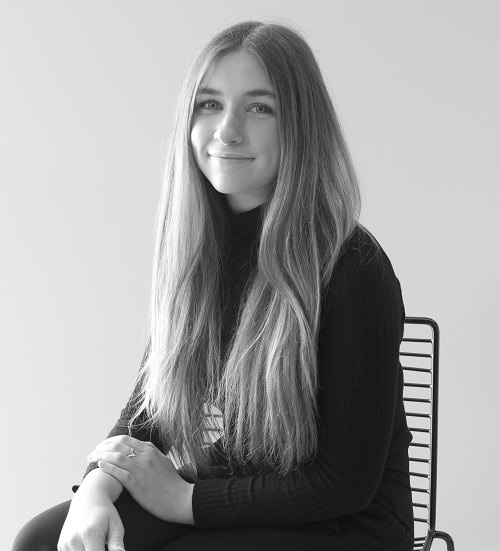 |
Ami Coulter - Project Manager & Architectural DesignerAmi is a Part II Architectural Designer who has worked in Glasgow since completing her Masters in Architecture at Strathclyde University with an exchange to VUT in Brno, Czech Republic. She shares HebHomes stance on environmental and contextual impact as well as using resources in a considered way. With varied experience across new build commercial and renovation projects, as well as marine design project management, she endeavours to become an asset to any project. Ami is a project manager and architectural designer, though new to the team, she is fast to adapt and up to the challenge. She is able to consider projects holistically, understanding possible problems and solutions, while her detail orientated nature allows her to approach design meticulously and consistently. |
|
|
|
|
|
.jpg)
.jpg)